Program
1
10 nights / 11
days
Day 01: Kathmandu-Paro
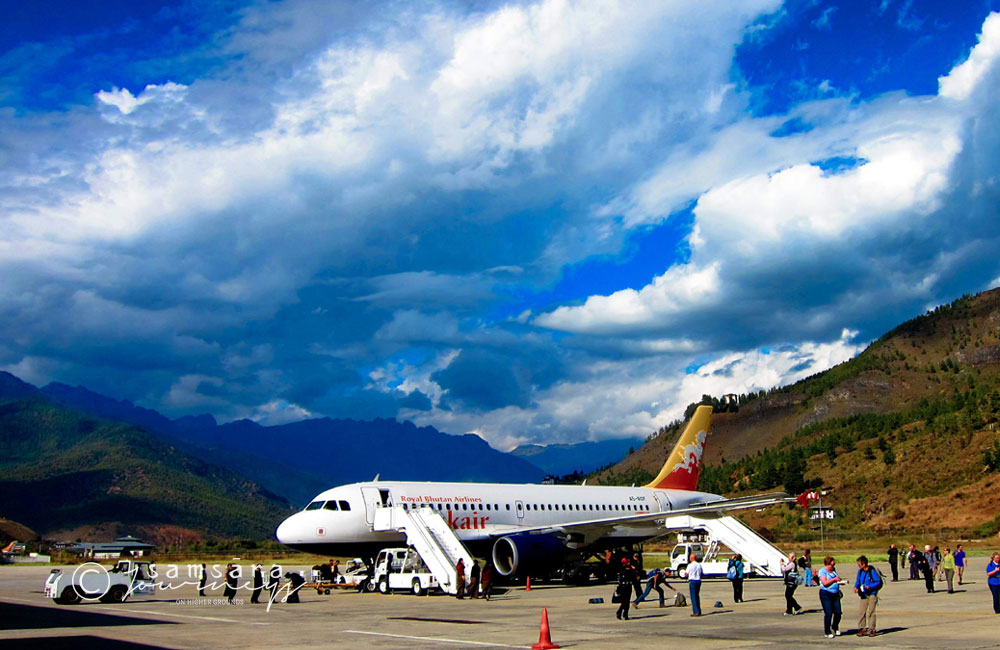
After a leisurely breakfast, transfer to the airport for
our Kathmandu-Paro flight on Druk Air. This exciting flight
should offer us spectacular mountain and landscape views.
On arrival and after visa formalities we will be received
by Bhutanese ITT members. Leaving the airport, we will
visit the ruined fortress of Drugzel Dzong, which still
attracts visitors due to the strategic location of the
fort, which defended the Paro Valley from the Tibetan invasion
from the north in the early 17th century. In clear weather,
Mt. Chomolhari (7320 meters) can be seen towering over
the Dzong. We will proceed through the beautiful valley
to the ancient watchtower, known locally as Ta Dzong. In
the 1960’s the Third King, Jigme Dorje Wangchuck
conceived the idea of restoring Ta Dzong as a place to
house the National Museum. The seven storey museum highlights
various aspects of Bhutanese culture and history dating
back to the 7th century. A short walk downhill takes us
to the Rinpung Dzong which serves as the administrative
center and school for monks. We will then walk further
down crossing a beautiful old traditional foot bridge into
Paro Town and stroll around the market before driving the
short distance to the Kichu Resort, scenically located
on the Paro Chu River.
Overnight Kichu Resort
Day 02: Paro to Punakha
Following an early breakfast we will hike to the viewpoint
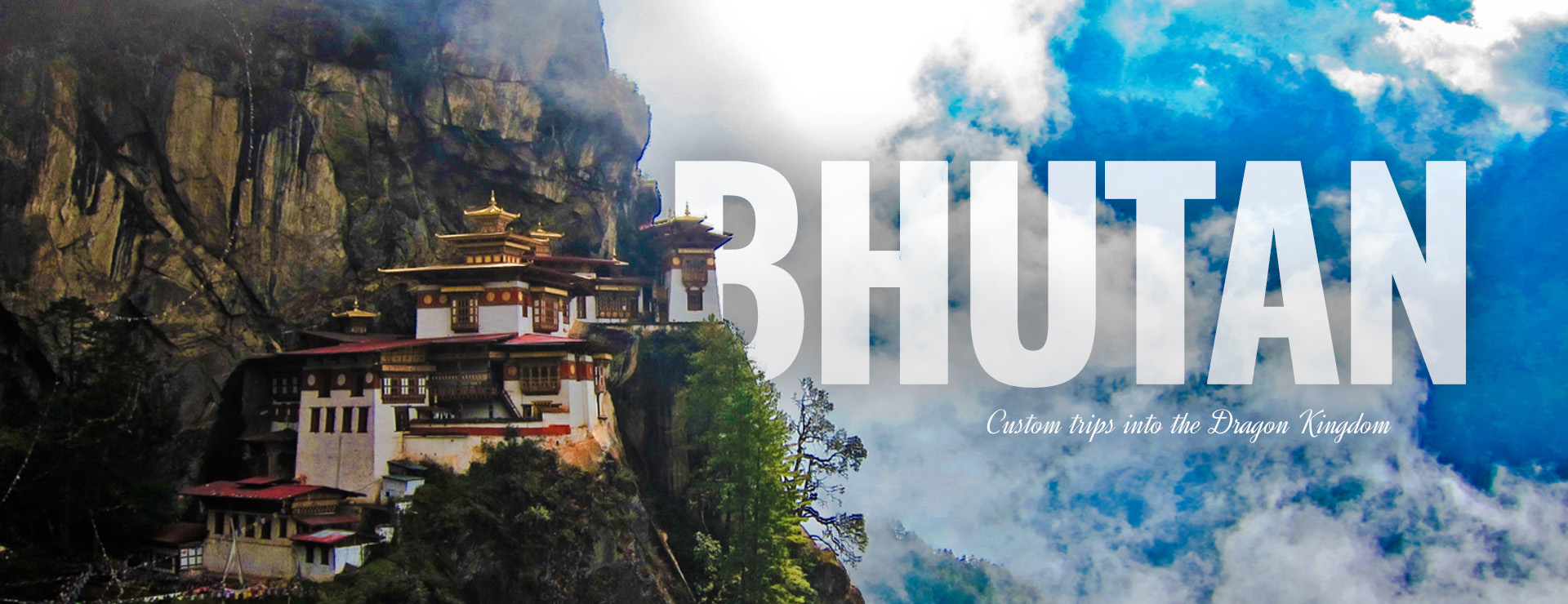
of the Taktsang Monastery, one of the most photographed
scenes in Bhutan. This is a beautiful walk, through pine,
oak and rhododendron forests and across streams where we
will hear the tinkling sounds of bells on water wheels
powered the by the water. Our destination is a tea house
with its spectacular views of the monastery which clings
to a huge granite cliff 800 meters above the Paro Valley.
It is believed that the great saint Padmasambhava came
in the 7th century on a flying tigress and meditated in
a cave here. The demons who were trying to stop the spread
of Buddhism were subdued and the valley was converted to
Buddhism. Towards the end of the 17th century the monastery
was built on the spot where the saint meditated and it
is a pilgrimage site that every Buddhist hopes to visit
in his lifetime.
For those who do not fancy an early morning hike, the opportunity
to simply relax in the gardens will be offered along with
the opportunity to browse in the markets of Paro town.
There is a government controlled handicraft shop as well
as several other interesting little places. Following our
return to the resort, we will have lunch then check out
for departure to Punakha. The 4-5 hour journey will take
us over the Dochula La Pass at 3050 meters or 10,000 feet.
Depending on weather we may see the most spectacular views
of the high peaks of the Eastern Himalayas. Our descent
from the pass to the lower and warmer valley of Lobesa
will take us through a temperate type of leafy forest where
rhododendron and magnolia bloom in March and April then
a semi-tropical zone where orange and banana tress and
cactuses grow. We will spend the night at a hotel owned
by the king’s father-in-law which overlooks the Punakha
Dzong.
Overnight Hotel Zangdopalri.
Day 03: Punakha to Tongsa
Following breakfast at the hotel we will visit the Punakha
Dzong which served as an old capital of Bhutan. This remarkable
fortress was built in 1637/8 by Shabdrung Ngawang Namgyal
though the site had been occupied as far back as 1328 by
a saint, Ngagi Rinchen. Guru Rimpoche blessed the site
in the 8th century. Spectacularly situated at the confluence
of the Pho and Mo Rivers, (literally the male and female
rivers) the Dzong has survived many glacial floods and
fires. Every year during the month of February a procession
known as the Punakha Serda takes place to commemorate victory
over the Tibetans. Following our visit to the Dzong we
will proceed over the Black Mountains to Tongsa. Traveling
over two more high passes we will pass through dense forest,
more rhododendrons and magnolia as well as high-altitude
dwarf bamboo, the favourite food of yaks. As we approach
Tongsa with its dramatic landscape we will see the Tongsa
Dzong at the bottom of the valley 20 kilometers before
reaching it. With any luck we will see a species of cherry
tree that flowers it the autumn so that the whole gorge
is dotted with pink trees. All of Eastern Bhutan was controlled
from the Tongsa Dzong during the mid 17th century. Tongsa
means “new village” and it was founded in the
16th century, relatively recent for Bhutan.
Overnight at the Yankhel Resort.
Day 04: Tongsa to Bumthang
Our relatively short drive to Bumthang from Tongsa will
offer magnificent views of the Himalayas and beautiful
landscape through scattered hamlets and forests of rhododendrons
and pine. As we depart Tongsa we will have a fantastic
view over Tongsa and the Dzong. We pass an ancient forest
then the road reaches the Yutong La Pass at 3400 meters
with a different landscape yet again. On arrival to Bumthang
we will visit the Chume Weaving Center.
Overnight Mountain Lodge
Day 05: Bumthang
A bumpa is an oblong-shaped lustral water vase and Bumthang
means “the plain shaped like a bumpa.” Bumthang,
at an altitude of 2600 meters/8530 feet is comprised
of four smaller valleys and there are more important
temples and monasteries in this area than anywhere else
in Bhutan. The deeply spiritual region of Bumthang is
shrouded in religious legend. Here tales of Guru Padmasambhava
and his reincarnation known as a terton (a discoverer
of religious treasures) still linger in most nooks and
crannies. Bumthang is also known for its woolen material
called yathra which can be seen hung outside of houses
for sale. We will visit the Jakar Dzong, the 7th century
Jambay Lhakhang, the Kurjey Monastery and Tamshing and
Kunchosum Monasteries. We will make this interesting
journey on foot.
Overnight Mountain Lodge.
Day 06: Bumthang
Today will be an excursion to the Ura Village where we
will see the new Ura Monastery. As we pass through the
Ura Valley we will see pine forests, semi-tropical forests
and orange groves. As we drive through the valley along
the Tang River we will come to a narrow gorge which contains
one of the great pilgrimage sites of Bhutan, the Mebartsho
which means “burning or flaming lake.” This
is where Pema Lingpa found the treasures hidden by Guru
Rimpoche and thus became a terton. Images of him and his
sons have been carved in the rock. Although it is called
a lake, it is actually a gorge which the river rushes through.
In the evening we will walk to the Swiss farm where apple
juice, cider and cheese are made.
Overnight Mountain Lodge.
Day 07: Bumthang to Wangduephodrang
Today we drive to Wangduephodrang. We will stop at a scenic
spot for a picnic lunch as we enjoy our leisurely drive.
Before checking into our resort we will stroll around the
Wangduephodrang Dzong which is perched on a spur at the
confluence of two rivers. Depending on time we can also
visit the local market area. The Wangdi Kichu Resort is
peacefully located in a lovely setting. It is situated
on a rushing river with forests on the other side. The
stone buildings which house the rooms, each with its own
balcony have beautiful views of the river and gardens.
Overnight Wangdi Kichu Resort
Day 08: Wangduephodrang
Today options will be available. If we did not have time
the day before to visit the Dzong we will do this first.
After that, for those who wish to do some hiking, there
will be the chance to hike to a ridge where the Monastery
of the king is located as well as affording us beautiful
views. For those who wish to forego a hike, shopping and
wandering through the town of Wangdi will be possible.
Simply relaxing at the resort is also an option.
Overnight Wangdi Kichu Resort
Day 09: Paro
Today we will drive 3 to 4 hours to Paro via Lobesa where
we will take a short walk through farmhouses and fields
to Chime Lhakhang. This monastery was built in the 15th
century and dedicated to the famous Lam Drukpa Kunley or “divine
mad man.” He is one of the most important saints
in Bhutan and the temple is a pilgrimage site for women
unable to bear children. We will have lunch at Thimpu,
the capital of Bhutan, and then allow some time for shopping
before continuing our drive to Paro. Enroute we will visit
the oldest building in Bhutan, the Simtokha Dzong. It now
serves as a Buddhist university.
Overnight Kichu Resort.
Day 10: Paro
Today we will explore the Haa Valley, recently opened
to visitors and remaining one of Bhutan’s’ most
pristine regions. At the Chuzom confluence, the road ascends
to the dramatic Wang Chu Valley where we will visit the
Dobji Dzong and if time permits, hike around its high ramparts.
The road into the Haa winds up through quaint villages
and thick conifer forests before leading into a valley
carpeted with fields of millet, barley potato and wheat.
The patchwork fields are dotted with farmhouses all adorned
with intricately painted cornices and door and window frames.
Visits to both Chundu Lhakhang and Lhakhang Karpo provide
an insight into the history of the valley. We have arrangements
to see the Wangchulo Dzong as well. The winding road then
ascends through pastureland past grazing yaks before reaching
the 3900 meter Cheli La Pass. Descending into the Paro
Valley, the scenery transforms from sub-alpine pasture
brilliant with wild mountain flowers to lush forests of
blue pine, cypress, larch, fir and rhododendron.
Overnight Kichu Resort
Day 11: Paro to Kathmandu
Transfer to the airport for our early morning flight to
Kathmandu.
|