Program
1
DAY 01: Kathmandu (Arrival)
Upon arrival at Tribhuvan International Airport in Kathmandu, you will be met, assisted and transferred to Hotel
Overnight: Hotel
DAY 02: Kathmandu
Breakfast at the hotel.
AM: Sightseeing of Kathmandu City and Swayambhunath Stupa.
Kathmandu City - visit the Durbar Square- this complex of palaces, courtyards and temple, built between the 12th and 18th centuries, used to be the seat of the ancient Malla kings of Kathmandu. Also visit Hanuman Dhoka, House of the Living Goddess and Kasthamandap, which is believed to be built from a single tree and other fascinating temples in the area.
Swayambhunath, the oldest Buddhist Stupa established more than 2500 year ago and also known as the “Monkey Temple”. Perched high on a hilltop, it commands a superb view of the entire Kathmandu Valley. Swayambhunath is also known as Sengu and is listed as a World Heritage Site.
PM: Sightseeing of Boudhanath Stupa.
Boudhanath, lies about 6 km to the east of down town Kathmandu and is possibly the world’s largest Buddhist Stupa and a site of great veneration for Buddhists. Around the Stupa have sprung up number of monasteries of the different sects of Tibetan Buddhism including one (on the West Side of the Stupa) that houses, an enormous seated statue of Maitreya Buddha splendidly adorned.
Overnight: Hotel.
DAY 03: Kathmandu-Nagarkot-Kathmandu
Breakfast at the hotel.
AM: Drive to Nagarkot - one of the popular tourist resorts of Nepal. It is situated 32 Kilometers east of Kathmandu at an altitude of 2175m. The panorama of the major peaks of eastern Nepal Himalayas including Sagarmatha (Mt. Everest), Manaslu, Ganesh Himal and other Himalayan Giants can be seen (weather permitting).
Lunch at Nagarkot.
PM: Sightseeing of Bhaktapur City and Thimi.
Bhaktapur, home of medieval art and architecture, also know as the “City of Devotees”. Tread the 17th century along cobbled pavements and marvel at the ancient architectures. The 15th-centuary Palace of 55 Windows, situated to the left as you enter through the city gate, inspires admiration. Visit the Golden Gate, is a masterpiece in reposes art.
Thimi is a medieval Newari town located 10 kilometers east of Kathmandu, which is famous for clay pots and masks.
Dinner on own.
Overnight: Hotel.
DAY 04: Kathmandu-Meghauly
Breakfast at the hotel.
Transfer to Domestic Airport in time for your Kathmandu/Bharatpur/Meghauly flight.
Upon arrival you will be met by the Jungle Lodge representative and taken by Land rover to the jungle lodge inside the Chitwan National Park.
Upon arrival at the Lodge, you will be met and briefed by the resident Guest Relations officer regarding the Park and the programmes available.
Most of the jungle lodgesa are situated 75 air miles southwest of Kathmandu, at an elevation of about 150 meters above sea level. It is in side the Royal Chitwan National Park, a 932 square kilometer (360 square miles) area of tall grassland and magnificent forest - one of Asia's richest and most spectacular wildlife sanctuaries.
All the double rooms at the Jungle Lodge are attractively furnished and each room has solar-heated showers and modern toilet amenities. Nepalese and Western cuisine is served in the central dining hall. A fully stocked bar is open until the last guest retires.
Overnight at the jungle lodge.
DAY 05: Inside the National Park.
Breakfast, lunch and dinner at Lodge.
Activities at the Jungle Lodge include wildlife viewing from elephant back, nature walks, jungle treks, bird watching, land rover drives, boat trips, wildlife viewing and photographing from machans (blinds). Every evening a slide show explains more fully about the fauna of the National Park. Experienced naturalists escort all excursions.
Overnight at the jungle lodge.
DAY 06: Chitwan National Park - Pokhara
Breakfast at the Lodge.
Early morning drive to Pokhara (5-6 hrs approx)
Upon arrival, check into hotel.
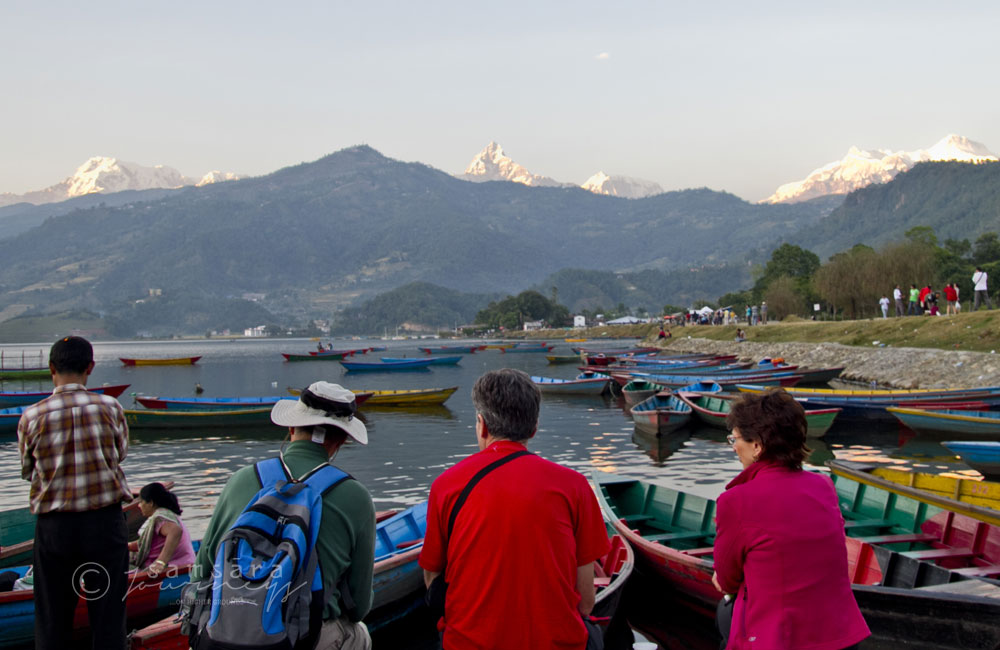
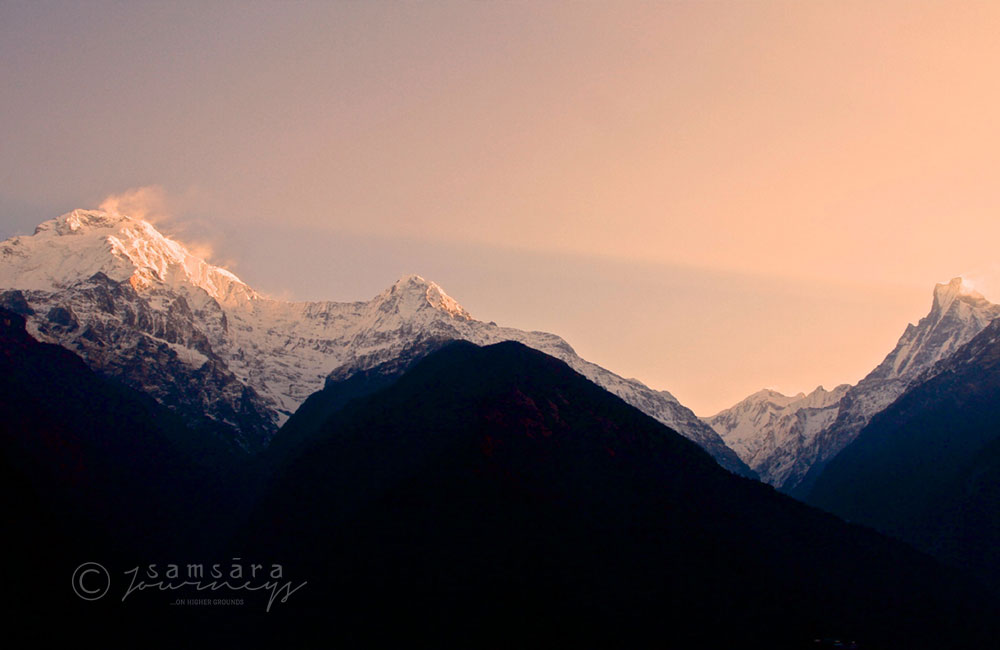
Nestled beneath the snow-crested Annarpurna Massif two hundred kilometers west of Kathmandu lies the Pokhara Valley. An ideal holiday spot whose beauty is enhanced by its lovely lakes Phewa, Begnas, Rupa and by the excellent mountain views it offers of Machhapuchre (Fishtail), plus a 148 kilometers of mountain horizon stretching from Dhaulagiri to Himalchuli.
PM: Free.
Overnight: Hotel.
DAY 07: Pokhara
Breakfast at the hotel.
After breakfast proceed for day hike to Peace Pagoda, which offers a breathtaking panorama of the valley floor, and the Himalayans, stretched out directly in front. The Japanese has built a big Buddha statue on the top of the hill
Lunch at Fewa Lake Area.
After lunch proceed for one-hour boat ride on the Fewa Lake.
Overnight: Hotel.
DAY 08: Pokhara
Breakfast at the hotel.
Sightseeing of Pokhara
Old Bazaar: Pokhara's traditional bazaar is colorful and so are its ethnically diverse traders. In its temples and monuments can be seen ties to the Newar architecture of the Kathmandu Valley. Located about 4 km from Lakeside, the market's original charm is alive and well.
Bindebashini Temple: This is one of the oldest temples in Pokhara. Legend says that when Pokhara was a part of Kaski Kingdom, the main deity of the temple, Goddess Durga, was brought from India. Apart from the peace and tranquility that can be felt in this region, the premises of the temple offers a good view of the Himalaya on a clear day. The temple is in the area of the bazaar. Hence, a journey of the old bazaar can be combined with a visit to the temple.
Phewa Lake: lake is the focus of tourism in Pokhara. It is the second largest lake in the western Nepal. The lakeside is genuinely picturesque, with relaxing and easy-going atmosphere. Large number of hotels and restaurants are located along its northeastern shore. Boating and fishing are the major attractions of Phewa Lake.
Barahi Temple: It is the most important monument in Pokhara. Built almost in the center of Phewa lake, this two-storied pagoda is dedicated to the boar manifestation of Ajima; the protectors deity representing the female force Shakti.
Devi’s fall:also known as Patale Chango is an awesome waterfall lying 2 km southwest of Pokhara. During summer and rainy reason, the waterfall takes its real form, with gushing water splashing and making its way through the rocks.
Gupteshwor Gupha: is a sacred cave located near Devi's Fall. The cave is almost 3 km long. It has some big hall-size rooms and some passages. This cave holds special value for Hindus since a phallic symbol of Lord Shiva is preserved here in the condition it was discovered. Taking pictures inside the cave is prohibited.
OR
After breakfast proceed for day hike to Sarangkot, which offers a breathtaking panorama of the valley floor and the Himalayans, stretched out directly in front. A view tower has been built on the top of Sarangkot hill at an elevation of 1700m.
Return to hotel.
Afternoon: Free for personal activities and shopping.
Overnight: Hotel.
DAY 09: Pokhara - Kathmandu
Breakfast at the hotel.
Transfer to Pokhara Airpport for your flight back to Kathmandu.
Upon arrival, meet, assist and transfer to hotel.
PM: Free.
Evening: A Nepalese Dinner with Cultural dance.
Overnight: Hotel
Day 10: Kathmandu
Breakfast at the hotel.
After breakfast: Sightseeing of the twin Newar village: Bungamati & Khokana
The twin villages of Bungamati and Khokana date from 16th century and typical ancient Newar Villages. These villages are located south of Kathmandu down a rutty road dotted with chaityas, appropriate for an ancient procession route. Bungamati is famous as the winter home of the Red Machhendra god of Patan who resides every winter in a powerful, Shikhara-style temple. Its spacious courtyard is often used for spreading grain to dry in the sun and where chicken farming is strictly forbidden.
Khokana is the twin Newar Village lying next to Bungamati, both dating back to the 16th century. In between the two settlements is the temple of Karya Binayak. Just like Bungamati, Khokana is a compact village. Running through it is a wide main street, which was built after the 1934 earthquake. In the middle of the street is the temple of Sikali Mai, Khokana's guardian mother goddess. Khokana has long been famous as an oil-pressing center where mustard seeds are pressed using traditional methods.
Lunch: At Patan Museum, Summit Café
PM: Proceed for sightseeing tour of Patan City and Tibetan Industrial Estate.
Patan City – the city of arts and architecture founded in 250 A.D. and also known as Lalitpur. It is renowned for its fine works in bronze, silver and copper. Visit the Durbar Square, like its counterpart in Kathmandu, is an enchanting mélange of palace buildings, artistic courtyards and graceful pagoda temples.
Tibetan Refugee Camp - was set up in 1960 under the initiative of the International Red Cross and the Swiss Development Corporation (SDC) then known as Swiss Association for Technical Assistance (SATA), in cooperation with His Majesty’s Government of Nepal. Its main objective is to help the Tibetan refugees to do something productive and support themselves.
Overnight: Hotel
DAY 11: Kathmandu (Departure)
Breakfast at the hotel.
Free time until transfer to the airport for your flight onwards. |