Introduction
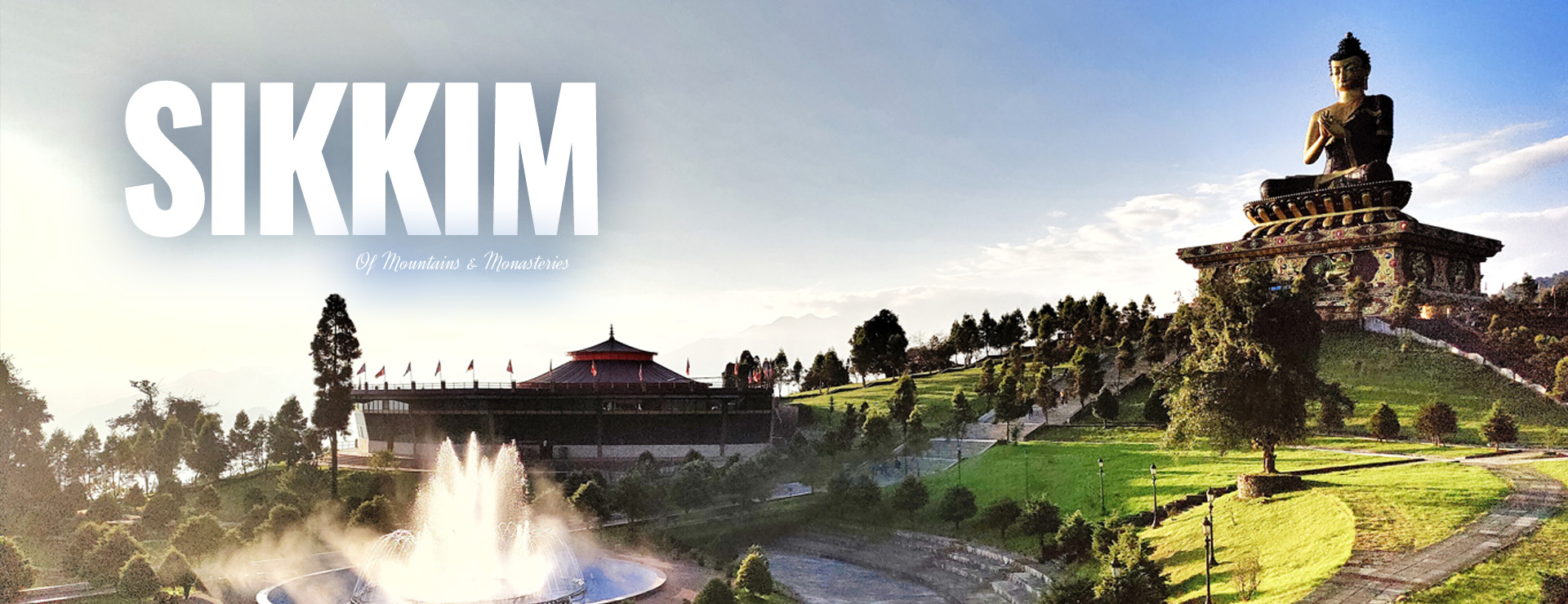
Sikkim,
an erstwhile Himalayan Kingdom, has been a State of
India since its merger in 1975. Located in the Eastern
Himalayas, it is wedged between the Kingdoms of Nepal
in the west and Bhutan in the east. With an area of
7,096 sq. kms, it has a rectangular shape measuring
about 114 kms from north to south and 64 kms from east
to west. The elevation varies between 300 mts to 8500
mts.
The greater Himalayas form a natural boundary with
Tibet and the Singalila range with Mt. Khangchendzonga
(8545 mts), the third highest peak in the world, running
north to south separating Sikkim from Nepal. On the
eastern front, the Chola range borders with Tibet and
the Pangola range further down separates Sikkim from
Bhutan. Finally, the vast plains of Bengal open out
in the south to form a horseshoe picture of the high
ranges bordering Sikkim.
The two major rivers, Teesta and Rangit, flow from
north to south creating deep gorges which divide Sikkim
into three longitudinal strips. The valleys in the
north are wider at Yumthang (3600 mts) and Lachung
(2700 mts) which are easily accessible by road. These
Rhododendron areas deep in the northern mountains are
inhabited by Lachungpas, who have preserved and maintained
their unique culture and a society governed by a traditional
village council - "Dzomsa".
The Teesta and Rangit rivers also offer the thrill
of riding the wild water and angling for some local
variety of fish.
|