The People
The people of Sikkim can be ethnically categorized
into Lepcha, Bhutia and Nepalese. The Lepchas are considered
to be the original inhabitants of Sikkim who practiced
nature worship and lived off the forest. With the coming
of the Bhutias, this tribal community was overwhelmed
culturally and religiously. Lepcha culture and ways
of life can be seen in some villages even now.
The Bhutias, Buddhist by faith are said to have come
from the eastern region of Tibet sometime in the 14th
century. They found the land warm and fertile and named
it "Demazong" or the "Valley of Rice".
Moreover, Sikkim was very prominently mentioned by
Guru Padmasambhava (the great 7th century Buddhist
saint who strengthened Buddhism in Tibet) in his scriptures,
as a very sacred place. It was also in consonance with
his scriptures the first "Chogyal" or the
religious king was consecrated at Yuksom in 1641. Since
then the Namgyal Dynasty ruled Sikkim uninterrupted
till 1975.
The Nepal community is a generalized term for the
many castes and sub-communities like Brahmins, Chhetris,
Newars, Kamis, and Damais, who are Aryans in origin
and the Rais, Limbus, Gurungs, Magars, and even Sherpas
who are basically Mongoloid. This community came into
Sikkim from 19th century though the Limbus are said
to have come much earlier. They were more agriculturists
unlike the Bhutias who were mainly dependent on animal
husbandry back home or the Lepchas who were forest
folks. The fertile valley was terraced to grow paddy
and maize and later cardamom as a cash crop.
The ethnic Sikkim is best seen in the villages rather
than the towns, which have become more cosmopolitan
in demography and culture.
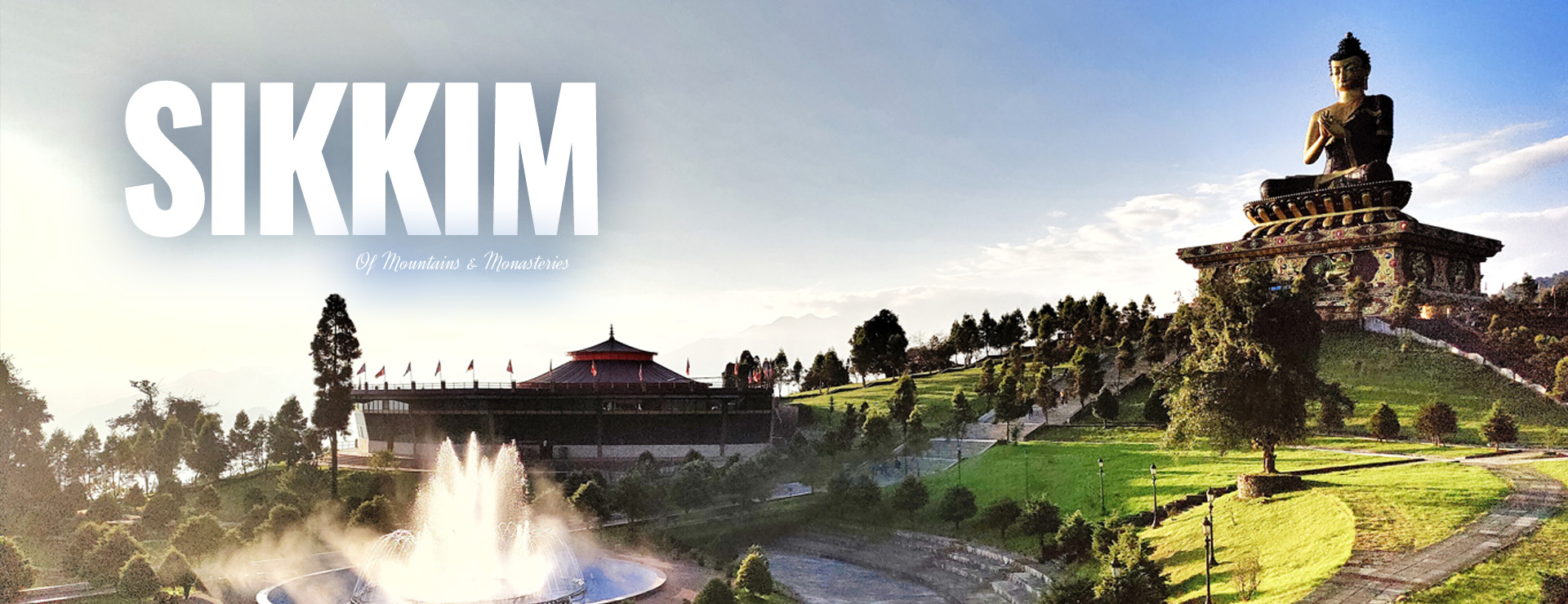
Buddhism has had a deep impact since time immemorial
in history when Guru Padmasambhava traveled to Tibet.
This has manifested in 200 monasteries and holy shrines.
The oldest amongst the monasteries is the one at Dubdi,
about an hour's walk from Yuksom. But Pemayangtse monastery
has been more prominent due to the privilege bestowed
to the Chief Abbot to coronate the successive Chogyal.
In recent time, the Rumtek monastery is widely known
as the seat of the Kagyupa sect and also the head quarter
of the worldwide Karma Kagyu centre. The Bhutias are
Buddhist and so are most the Lepchas. The Nepalese
are Chiefly Hindus but many people in the villages,
regardless of their religion still have strong beliefs
in the spirits which are said to inhabit the mountains
and hills, rocks and caves, streams and rivers and
even trees and forests which are to be appeased by
the "Jhankri" or the "Bongthings".
|